The pool deck is the most-used surface in a Green Valley backyard for half the year and the most punishing one to design well. It is the surface that determines whether kids will run from the pool to the lounge chairs or stay in the water all afternoon to avoid burning their feet on the way out. It takes the worst of the summer sun, the chemistry of pool water splashed from the surface, and the freeze-thaw cycle from a few cold nights each winter. The original concrete deck that came with the pool 15 or 20 years ago is usually past its useful life by the time owners start asking about resurfacing.
The good news is that the resurfacing materials available now are dramatically better than what was on the market a decade ago. Cool-deck coatings have improved meaningfully. Porcelain pavers have come into the market at competitive pricing. Travertine remains the gold-standard option for staying cool underfoot. Here is how to think about resurfacing options for Green Valley homes, what each material actually does, and what it costs.
Why Pool Decks Need Resurfacing in Green Valley
A pool deck takes a beating in this climate. The summer sun heats dark concrete to surface temperatures of 140 to 165 degrees on a clear afternoon, hot enough to cause discomfort within seconds and burn within minutes. Pool chemistry from chlorine and salt-system splash slowly degrades the surface. The hard water that plagues every other surface in the home also leaves mineral deposits on the deck. Monsoon-season pooling water seeps into existing cracks and accelerates deterioration. The 30 to 50 degree winter overnight temperature swings expand and contract the slab.
Most original-construction concrete pool decks in Green Valley start showing meaningful wear at the 12 to 18 year mark - surface scaling, pop-outs, hairline cracks growing into bigger cracks, sections where the surface has worn smooth and slick when wet. By 20 to 25 years, most need either substantial repair or full resurfacing.
Resurfacing is also a frequent project for homeowners who simply want to upgrade from a dark, hot concrete deck to a material that performs better in summer, even if the existing slab is still structurally sound.
The Materials Worth Considering
Five materials make up the great majority of pool deck resurfacing projects in Green Valley:
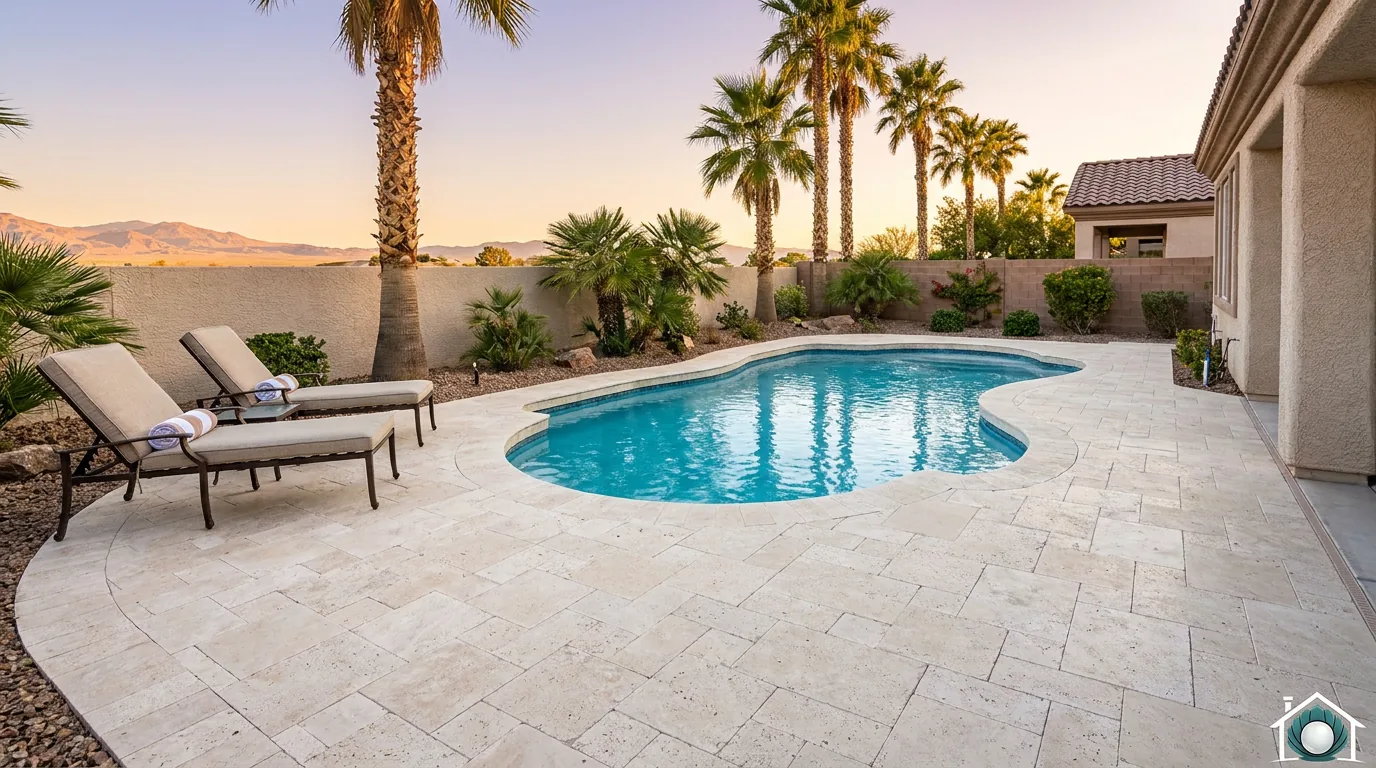
Travertine pavers are the gold standard for hot-climate pool decks. Travertine is a naturally porous limestone that reflects heat rather than absorbing it, which is why it stays significantly cooler underfoot than almost any other material. The pavers come in several thicknesses - the standard pool deck application is 1.25 inches, set on a sand or polymer-sand base over a properly prepared substrate. Color options range from cream and ivory to silver and walnut. The typical installation cost runs [$15 - $30 per square foot] including base prep, edging, and labor. Travertine has been the dominant pool deck material in higher-end Green Valley homes for over a decade and shows no sign of being displaced.
Cool-deck coatings are textured cementitious coatings applied over existing concrete. They are formulated with light pigments and surface texture that combine to keep the deck noticeably cooler than bare concrete. Modern cool-deck products are significantly better than the cool-deck coatings of the 1990s and early 2000s, which often cracked and chipped within a few years. A quality contemporary cool-deck install typically lasts 8 to 15 years and runs [$5 - $12 per square foot]. The biggest advantages are cost (the lowest of any option) and the ability to overlay an existing concrete deck without removal. The disadvantage is that the coating is still applied over concrete, so any structural problems with the underlying slab eventually show through.
Porcelain pavers are the newest entry to the pool deck market and have grown quickly. Porcelain is dense, frost-resistant, fade-resistant, and available in patterns that mimic natural stone, wood, and concrete. Pool-rated porcelain pavers come in a 0.75 to 1 inch thickness, have rectified edges for tight joint lines, and can be installed over a properly prepared base or over existing concrete. Color and pattern options are essentially unlimited. Installation cost runs [$18 - $38 per square foot] including base prep. The trade-off versus travertine is that porcelain reads more contemporary (which is a positive or negative depending on the home’s architecture) and runs slightly hotter than travertine, though still significantly cooler than concrete.
Concrete pavers are the most common mid-range option in Green Valley. They come in many shapes, colors, and patterns, and they install over a properly prepared base for a clean, durable surface. Lighter colors stay reasonably cool; dark colors are a poor choice for pool decks in this climate. Cost typically runs [$10 - $22 per square foot] installed. Concrete pavers are the workhorse choice for homeowners who want a paver look without the premium of travertine or porcelain.
Stamped concrete and decorative concrete overlays are the budget end of the resurfacing market. Stamped overlays apply a thin cementitious layer over existing concrete and stamp it with a pattern (faux flagstone, faux brick, geometric patterns). Cost runs [$8 - $18 per square foot]. The result can look attractive when first installed but tends to show wear, color fade, and pattern softening within 5 to 10 years. The right choice for short-term cosmetic refresh on a tight budget; not the right choice for a long-term solution.
Surface Temperature - The Single Biggest Decision
The ranking of surface temperature on a 110-degree Green Valley afternoon, sun-loaded:
| Surface | Approximate temperature |
|---|---|
| Dark concrete or dark pavers | 145 - 165 °F |
| Standard concrete (medium grey) | 130 - 145 °F |
| Light-colored cool-deck coating | 105 - 125 °F |
| Light-colored porcelain pavers | 100 - 120 °F |
| Travertine (cream or ivory) | 95 - 115 °F |
The numbers swing depending on color value, time of day, and whether the surface has been recently splashed with pool water. The pattern is consistent: lighter colors and naturally porous materials stay cooler than darker colors and dense materials. A travertine pool deck stays roughly 40 to 50 degrees cooler than a dark concrete deck on a peak summer afternoon.
The practical impact is the difference between a usable mid-day pool deck and one that drives everyone back into the water or into the house until evening.
Drainage and Sub-Base Matter More Than the Surface
The most consequential decision in any pool deck resurfacing project is not the material - it is the drainage and the sub-base. A beautiful surface installed over a poorly draining or shifting substrate will fail within a few years no matter how good the material is.
Done correctly, a paver install includes proper grading away from the pool and house, a compacted aggregate sub-base sized to local soil conditions, a leveling layer, and edge restraints that keep the field of pavers from drifting. A coating install includes proper crack repair, surface prep that gets the coating to bond, and re-establishing any failed control joints in the existing concrete.
Done incorrectly, the install puts new material directly over loosened soil or thin gravel, with poor drainage, and pavers that begin to shift within a season or coatings that bond poorly and chip within a year. This is where the cheapest quotes typically end. The difference between a bargain quote and a quality quote is almost always in the labor and materials under the surface, not the surface itself.
Pool Equipment, Coping, and the Interface Details
The pool deck does not exist in isolation. It meets the pool coping (the cap on top of the pool wall), the pool equipment area, the home’s exterior, and any landscape edges. Each of those interfaces is a place where a careless install causes problems.
The pool coping is usually the trickiest interface. A new deck has to terminate cleanly against existing coping (in a refresh project) or have new coping installed at the same time (in a more comprehensive project). The transition between deck and coping needs to be watertight to keep splash water from getting under the deck material and undermining the install.
The pool equipment area (pump, filter, heater) often includes valving and access panels that need to remain serviceable after the deck is finished. A thoughtful install plans the coping line and material breaks to allow equipment access without removing pavers or cutting into a coating.
The interface with the home’s exterior matters for both drainage and aesthetics. A new deck should slope away from the home, not toward it, and should terminate at a clean edge that does not trap water against the foundation or stucco.
Costs in Green Valley
A typical Green Valley pool deck of 600 to 1,000 square feet generally falls into one of these ranges, depending on material and scope:
A cool-deck coating refresh on existing concrete usually runs [$3,500 - $12,000] including surface prep, repairs, and finish. A paver install over existing concrete (overlay) runs [$10,000 - $24,000] depending on material. A full tear-out of existing concrete plus new paver install runs [$12,000 - $35,000+] depending on material, sub-base requirements, and any pool coping or equipment work needed at the same time.
Larger pool decks, custom patterns or borders, integrated water features, or adjacent landscape work push the project higher.
These ranges are general industry pricing for Green Valley and depend on material selection, square footage, and the condition of the existing deck. A walk-through with a contractor is the best way to get an accurate quote for a specific yard.
Best Season to Resurface
The ideal seasons for pool deck resurfacing in Green Valley are March through May and September through November. Daytime temperatures are mild enough that crews work effectively and material cure times are manageable. Cool-deck coatings in particular benefit from cooler weather - applying them in July afternoon heat is workable but adds risk of flash-drying problems.
Summer installation is possible but slower. Crews work early-morning shifts, materials need careful handling, and progress is paced to the heat. Winter installation is also possible but cure times for cementitious products extend significantly, and overnight temperatures occasionally drop below the manufacturer’s minimum cure threshold.
The pool itself needs to be either covered or access-restricted during the install to prevent debris from contaminating the water. Most homeowners arrange to use the pool minimally during the construction window and resume normal use after the deck is sealed and cured.
HOA Considerations
Most master-planned Green Valley communities have architectural review requirements for visible exterior changes. A resurfacing project that changes the deck color or material typically requires submission and approval before work begins. Approval timelines vary by community but typically run 2 to 6 weeks. Submit the proposal early so HOA approval is not the bottleneck holding up the project.
A few HOAs have specific approved materials or color palettes for pool decks. Travertine in cream or silver tones is widely accepted; cool-deck coatings in approved colors are typically fine; certain bright or contemporary porcelain patterns may require additional review.
Planning the Project
A standard pool deck resurfacing project from first consultation to a finished deck typically runs 4 to 10 weeks total - 2 to 4 weeks for design, material selection, and HOA approval, then 1 to 4 weeks of active installation, plus cure time before the deck is back in full use.
The right window to start a project meant to be done before peak pool season is mid-winter through early spring. For a project meant to be enjoyed this fall, late summer is the practical start window.
If you are planning a pool deck resurfacing project or a broader backyard remodel, Pearl handles outdoor living projects in Green Valley and the rest of the valley. Request a free in-home consultation or call (702) 602-8385. We will look at the existing deck condition, talk through material options that fit your yard and budget, and put together a realistic plan and quote.