A Paradise backyard is one of the most underused assets in most older homes in the submarket. Original construction from the 1970s through the early 2000s typically left backyards as functional but uninspired spaces - a rectangle of turf, a concrete patio under a builder-grade aluminum cover (or no cover at all), and a pool that has not been touched since installation. The result is a backyard that is unusable for half the year because of summer heat and unappealing for most of the other half.
The shift toward outdoor living as a major remodel priority changed that calculus across the valley. Buyers shopping in Paradise now expect a usable, well-finished outdoor space, and homes that deliver one consistently sell faster and at better prices than comparable homes that do not. The challenge for current homeowners is figuring out which outdoor upgrades actually pay back at resale, which improve daily life without being investments, and which are mostly money spent on a personal preference. Here is the honest version.
What Outdoor Living Means in Paradise Now
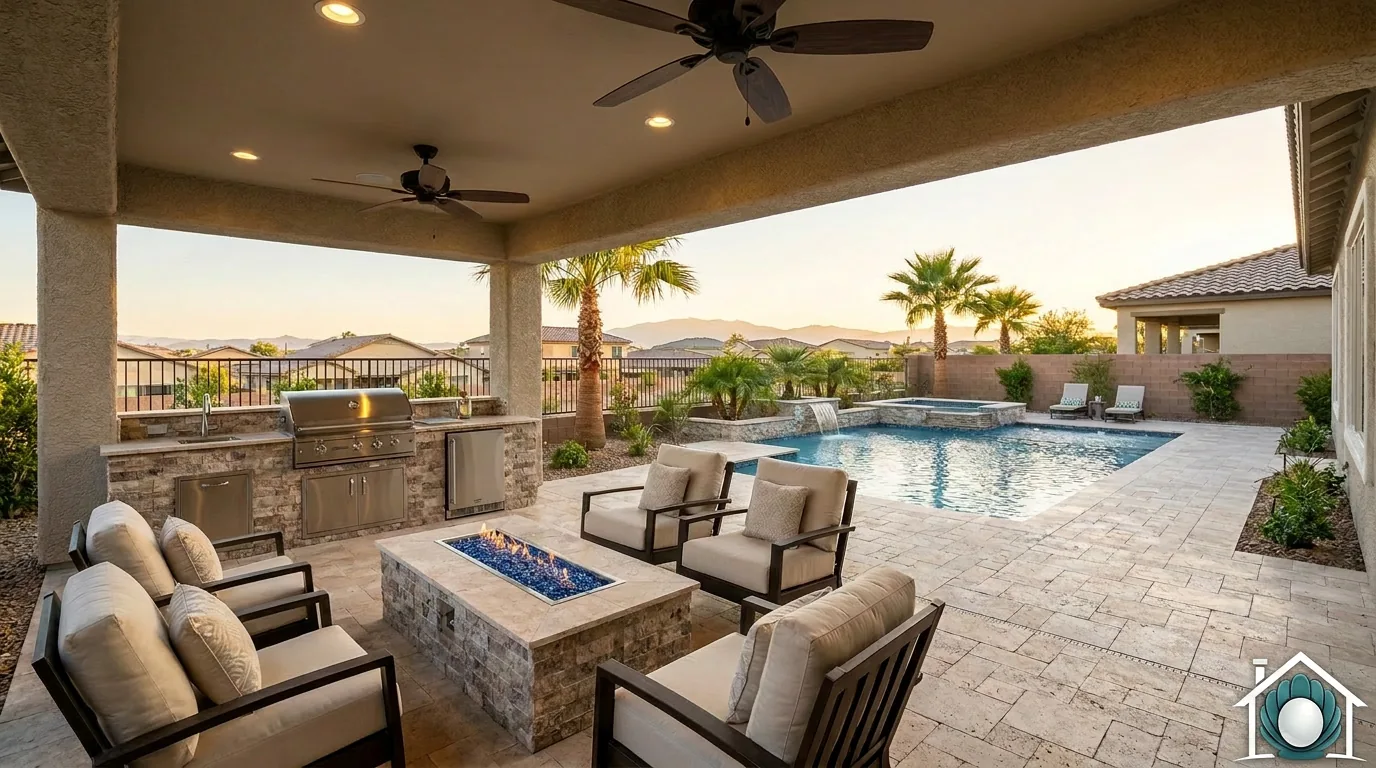
The phrase covers a wider scope than it used to. Five or ten years ago, outdoor living typically meant a covered patio with a grill and a few chairs. Today the term includes structural elements (covered or louvered shade structures, exterior walls and screening), surface treatments (paver patios, travertine pool decks, decorative concrete), kitchens (built-in grills, counters, refrigerators, sometimes full ranges and pizza ovens), comfort systems (ceiling fans, misting systems, outdoor heaters, integrated lighting), water features (pools, spas, fire-and-water elements), landscape (drought-tolerant plantings, paver walkways, retaining walls), and the integration of all of these into a single coherent design.
A modern Paradise outdoor living buildout treats the backyard as a series of outdoor rooms rather than as a single space. There is typically a covered dining or lounge area (the workhorse zone that needs to function in summer), an open seating area or fire feature zone (used in shoulder seasons and evenings), a pool deck if a pool is present, and one or more transitional zones that connect to the home’s interior through patio doors.
The integration is what separates a high-value outdoor living buildout from an accumulation of expensive yard accessories. The structures, surfaces, and features need to read as a designed space, not as a series of additions. A buyer walking through a backyard immediately registers whether the elements feel intentional or pieced together.
The Five Outdoor Features That Add the Most Value
The following five categories consistently deliver the strongest combination of resale value, daily usability, and broad buyer appeal in current Paradise market conditions.
The single highest-leverage outdoor investment is a covered patio with electrical. A solid patio cover (insulated aluminum or custom stucco-finished) with ceiling fans, recessed lighting, outdoor outlets, and ideally a TV-ready outlet transforms the backyard from a summer-unusable space into a year-round outdoor room. Project cost typically falls in the [$8,000 - $40,000+] range depending on size and finish. The investment is partially recovered at resale (typically 60 to 80 percent return) and substantially improves the daily livability of the home for the years the owner lives in it.
The second is a refreshed or upgraded pool deck, particularly in homes with existing pools where the original deck has aged into surface scaling, cracking, or hot dark concrete. A travertine or quality cool-deck coating refresh costs [$8,000 - $30,000+] and dramatically improves the look and usability of the pool area. Pool decks are one of the first features buyers notice when walking out the back door, and a refreshed deck signals a well-maintained home.
The third is a simple, well-built outdoor kitchen. The strong-performing version is a clean built-in counter with a quality grill, a small refrigerator, and counter space for prep and serving, typically positioned under or near the covered patio. Project cost typically falls in the [$15,000 - $45,000] range. The lower end is a basic stucco or stone counter with a grill insert; the upper end includes premium grill, refrigerator, side burner, and finished cabinetry. Outdoor kitchens add real value when they are clean and broadly appealing; they add less value when they are elaborate, specialized, or themed.
The fourth is a gas fire feature integrated into the design. A built-in linear fire feature in a low wall, a gas fire pit table integrated into a seating zone, or a fire-and-water feature at the pool edge all add visual impact, functional gathering space for evening use, and significant showing appeal. Project cost typically falls in the [$3,500 - $15,000+] range depending on complexity. Fire features tend to perform well at resale because they are visually striking during showings without being themed or specialized.
The fifth is drought-tolerant landscape and lighting that ties the backyard together as a coherent designed space. Replacing failing turf with drought-tolerant plantings, paver walkways, decorative gravel zones, and integrated landscape lighting can transform an inherited backyard into one that reads as deliberate. Project cost varies widely - basic landscape refreshes run [$5,000 - $15,000], full backyard landscape transformations [$20,000 - $80,000+]. Quality landscape consistently improves time on market and curb appeal.
What Generally Does Not Pay Back
A few outdoor upgrades that consistently underperform on resale - either because they appeal to a narrow buyer segment, signal high maintenance burden, or read as a personal preference rather than a broad upgrade:
Themed outdoor spaces - Tuscan, tropical, Mediterranean, or other strongly stylized designs - often appeal to the homeowner who built them and to a narrow slice of buyers. The next owner usually plans to undo them, which means they show poorly during marketing.
Major water features beyond pools - large koi ponds, oversized fountains, complex stream features, and the like - read as ongoing maintenance and operating cost. Many buyers actively prefer not to have them.
Built-in playground equipment, sport courts, and other use-specific features have very narrow buyer appeal. They are great for the family that uses them and have minimal value to buyers without children of the right age.
Massive swim spas or oversized hot tubs that consume significant backyard footprint without delivering proportional usability for most buyers. A reasonable spa attached to a pool or a smaller standalone hot tub performs better than an oversized swim spa.
Adding a new pool to a Paradise home that does not currently have one is rarely a sound investment from a pure resale perspective. New pool installations cost [$60,000 - $120,000+] and typically return only 40 to 60 percent at sale. The case for a new pool is the homeowner’s own enjoyment, not resale recovery.
Elaborate landscape lighting systems with proprietary controls, complex zone configurations, or smart-home integrations that the next owner will struggle to operate. Quality, simple lighting on standard controls performs better than over-engineered systems.
Designing for Real Paradise Use
Paradise summer is the design constraint that drives every successful outdoor living project in this submarket. A backyard that looks beautiful in March renderings but is unusable from June through September is a design failure, regardless of cost.
The orientation of the patio matters significantly. West and southwest-facing patios take the worst summer afternoon sun and need substantial shade structures, ceiling fans, and ideally misting systems to be functional in July. East-facing patios are more usable through summer but get less evening sun than west-facing patios for shoulder-season enjoyment. Most Paradise backyards do not allow choosing the orientation, but designs should accommodate the orientation the home actually has.
Surface temperature drives kid and pet usability. Light-colored travertine or porcelain pavers stay 30 to 50 degrees cooler than dark concrete or pavers on a 110-degree afternoon. The single biggest difference between a backyard that families use through summer and one that gets abandoned to the heat is the surface temperature underfoot.
Shade structures need to actually shade. A pergola without overhead panels provides only 30 to 60 percent shade and is not enough for July afternoons in Paradise. Solid covers, louvered pergolas, or pergolas with shade fabric or polycarbonate panels above the slats are required for genuine summer use.
Electrical and plumbing should be planned at the structure stage, not retrofitted later. Adding a ceiling fan, lighting, outlets, or a misting system after the cover is built typically costs significantly more than including them during the original install.
Cost Brackets and ROI Estimates
Rough cost ranges and resale recovery estimates for top categories in Paradise:
| Project | Typical cost | Approximate resale recovery |
|---|---|---|
| Insulated aluminum patio cover with electrical | [$8,000 - $20,000] | 65 - 80% |
| Custom stucco-finished cover | [$18,000 - $40,000+] | 60 - 75% |
| Travertine pool deck refresh | [$10,000 - $30,000] | 55 - 75% |
| Cool-deck coating refresh | [$3,500 - $12,000] | 60 - 75% |
| Simple built-in outdoor kitchen | [$15,000 - $30,000] | 50 - 70% |
| Premium outdoor kitchen with refrigerator and storage | [$30,000 - $60,000+] | 45 - 65% |
| Built-in gas fire feature | [$3,500 - $15,000] | 60 - 75% |
| Drought-tolerant landscape with lighting | [$10,000 - $40,000] | 60 - 80% |
| Full outdoor living suite | [$45,000 - $150,000+] | 60 - 75% |
| New pool installation | [$60,000 - $120,000+] | 40 - 60% |
These ranges are general industry pricing for the Paradise submarket and depend on size, finish tier, and the broader condition of the home. The resale recovery estimates assume the work is well-built, broadly appealing, and well-maintained at the time of sale.
Time on Market Matters as Much as Sale Price
A point that is often missed in resale discussions: outdoor living quality affects time on market as much as sale price. Two homes priced similarly with similar interior conditions but different outdoor spaces will sell at noticeably different speeds. The home with the well-finished backyard typically sells in days to a few weeks; the home with the neglected backyard often takes months or requires price reductions.
For homeowners planning to sell in 2 to 5 years, this matters - a [$40,000] outdoor living buildout that returns [$28,000] at sale (70 percent recovery) and reduces time on market from 90 days to 14 days delivers far more total value than the recovery percentage suggests. Carrying costs during longer marketing periods (mortgage, taxes, utilities) often dwarf the gap between recovery and original cost.
Planning the Project
A standard covered patio install runs 1 to 4 weeks of active construction depending on scope. A custom stucco-finished cover with full electrical typically runs 4 to 8 weeks. A full outdoor living buildout (covered patio, outdoor kitchen, fire feature, pool deck, landscape) usually runs 8 to 16 weeks. Permitting and HOA architectural review for any exterior work typically adds 4 to 10 weeks on the front end.
The right window to start an outdoor project meant to be enjoyed this fall or for next year’s pool season is mid-summer through early fall - the construction crews are slightly less booked, design and material selection are unhurried, and the project is ready to use before the next peak season starts.
If you are planning an outdoor living buildout in Paradise - either as a daily-life upgrade or as part of a longer-term resale strategy - Pearl handles design, permitting, and construction for outdoor living projects in Paradise at every tier from cover-only refreshes to full multi-zone buildouts. Request a free in-home consultation or call (702) 602-8385. We will walk the yard with you, talk through what scope fits your goals and budget, and put together a realistic plan and quote.