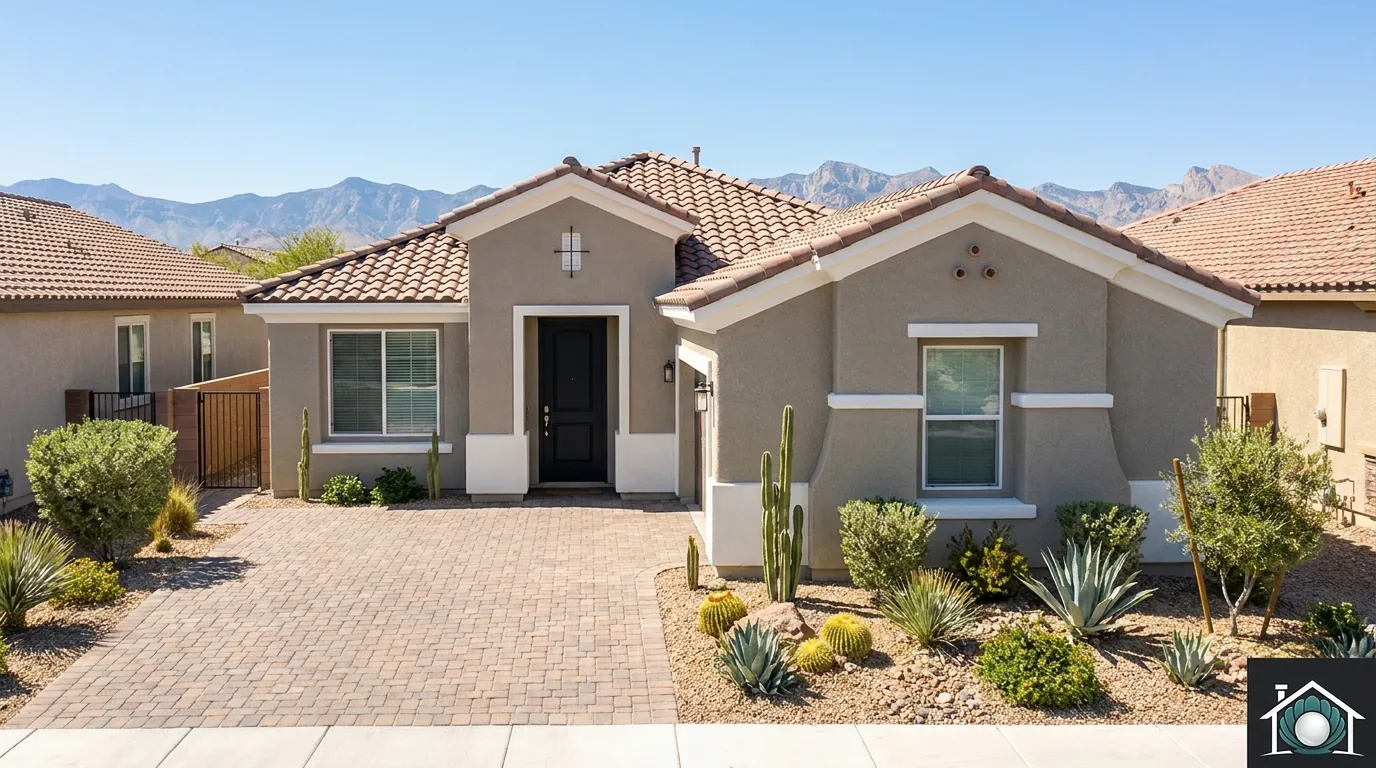
Summerlin sun is the toughest test exterior paint will ever face. UV intensity at this elevation is roughly 30 percent higher than at sea level, summer wall temperatures regularly exceed 140 degrees Fahrenheit on west-facing stucco, and the temperature swing between July afternoon and January morning can hit 80 degrees on the same wall. None of that is friendly to a finish that needs to look fresh for a decade.
If you are planning to repaint your Summerlin home, the choice that matters most is not which trendy color you pick from the fan deck. It is whether the color, the product, and the prep can survive the climate. Here is what holds up, what fails fast, and how to spend your repaint budget where it counts.
Why Summerlin Sun Is So Hard on Exterior Paint
Three things conspire against exterior paint in this part of the valley:
- UV intensity. Pigments break down under ultraviolet light. Some pigments are far more UV-stable than others (more on this below), but every color fades at some rate. The thinner the atmosphere, the faster it goes.
- Surface temperature. A west-facing dark stucco wall can reach 145 to 160 degrees on a clear July afternoon. Repeated thermal cycling expands and contracts the paint film, eventually causing it to crack, chalk, or peel.
- Monsoon and dust. Late-summer storms drive abrasive dust into the wall surface at high speed, then deposit a film that traps heat and chemistry against the finish. Premium paints are formulated to resist this; cheaper paints get sandblasted.
Paint that lasts here is the right product applied to a properly prepped surface in the right color range. Skip any of those three and you are repainting in five years instead of ten.
Colors That Hold Up Best
The most fade-resistant exterior colors in this climate share two traits: they sit in a medium-to-light value range (lighter colors stay cooler and absorb less UV-degrading energy) and they use inorganic or otherwise UV-stable pigments.
Color families that consistently age well in Summerlin:
- Warm whites and creams. Soft off-whites, alabaster, bone, and warm linen colors are the most forgiving. They hide minor fading, stay cool, and read well against tile roofs.
- Greiges and warm beiges. The current dominant Summerlin palette - greige, mushroom, sand, and warm taupe - holds up well because the underlying pigments are typically iron-oxide based and inherently UV-stable.
- Soft sage, muted olive, and dusty terracotta. Earth tones with reduced saturation age gracefully. Their pigment chemistry is naturally desert-friendly, and they harmonize with the surrounding landscape.
- Soft warm grays. A gray with a slight warm undertone (avoid blue-grays) ages well and matches the slate and stone tones common to higher-end Summerlin developments.
If you want something a bit more distinctive, a slightly deeper version of any of these colors used as a body color works fine in Summerlin. The key is staying in the medium value range and avoiding heavily saturated pigments.
Colors That Fade Fast (and How to Use Them Anyway)
Some pigments simply do not survive direct desert sun. The rule of thumb: the more saturated and the deeper the color, the worse it ages. Specific problem colors:
- True reds and deep oranges. Most red and orange pigments, especially organic ones, fade quickly and unevenly. Within 3 to 5 years a deep red door can read pink or salmon. Inorganic-pigment alternatives exist and last much longer, but the price per gallon doubles or triples.
- Deep blues and purples. Same problem. Organic blue pigments are notoriously unstable in UV. Inorganic versions (cobalt, ultramarine) are more stable but expensive and limited in shade.
- Bright greens. Bright synthetic greens fade noticeably within a few summers. Muted, earth-leaning greens (sage, olive, eucalyptus) hold up far better.
- True black, on a body-sized surface. Heat absorption and pigment fade combine to make true black a bad choice for full walls in Summerlin. It works on doors, accents, and metalwork in small quantities. As a body color, it shortens the repaint cycle dramatically.
If you love a high-saturation accent color, use it for the front door or a small architectural feature. The square footage is small enough that you can repaint it every 3 to 5 years without much cost or hassle, and the finish stays vivid because it gets refreshed regularly.
Paint Quality and What to Look For
The paint product is at least as important as the color. The exterior paint market spans a wide quality range, and the difference between a contractor-grade product and a top-tier exterior product is significant in this climate.
What separates premium exterior paint:
- 100 percent acrylic resin. Better adhesion, better elasticity through temperature swings, better resistance to chalking and color shift than vinyl-acrylic blends.
- High pigment loading. More pigment per gallon means richer color and longer fade resistance.
- Mildewcide and dirt-shed additives. Useful even in a dry climate because of the dust film that monsoons leave behind.
- High-build or elastomeric formulations. For stucco that has hairline cracks or seasonal movement, an elastomeric coating bridges the cracks and stretches with the wall. Costs more but doubles the realistic life on a hot west exposure.
- Manufacturer warranty. Premium-tier exterior paints carry warranties of 15 to 25 years or “lifetime” against fade and peel. Read what is actually covered - usually the product, not the labor - but the warranty is a real signal of confidence in the formulation.
Ask your contractor what specific product line they are quoting and look up its data sheet. If the answer is vague or you cannot find the product on a manufacturer’s website, that is a flag.
Sheen Choices for Stucco
Stucco texture is unforgiving of glossy finishes. The peaks of the texture catch glare and the valleys read flat, which makes the wall look uneven. The standard recommendation in Summerlin:
- Body (stucco walls): flat or low-sheen flat. Hides imperfections, takes touch-up cleanly.
- Trim, fascia, and accent boards: satin or semi-gloss. Reads as a deliberate architectural element.
- Front door: semi-gloss or full gloss for a vivid finish that wipes clean.
- Metal (railings, garage door panels): satin to semi-gloss in a paint formulated for metal substrates.
A flat-on-flat scheme reads quietly and architectural. A sheen contrast between body and trim adds depth without making the house look fussy.
Prep Is Most of the Job
Color choice and product matter, but the work that determines whether the paint actually lasts happens before the first coat goes on. A repaint that skips prep is a 4-year repaint, regardless of the product on the can.
The non-negotiable prep steps for Summerlin stucco:
- Pressure wash and full dry. Removes dust, chalk, and biological growth. Wall must be fully dry before priming.
- Stucco crack repair. Hairline cracks get caulked or filled with elastomeric patch. Larger cracks may need stucco patching - skipping this step guarantees the new paint will crack along the same lines.
- Spot prime bare stucco and any patched areas. A masonry primer keeps the topcoat from absorbing unevenly.
- Repair and re-caulk window and door perimeters. Failed caulking is the biggest single cause of paint failure on stucco. New caulking gets a small color-matched touch-up.
- Two full coats of body paint, brushed-and-rolled or spray-and-back-rolled. A single thick coat does not perform like two properly applied thinner coats.
If a quote is much lower than another quote, ask which prep steps are included. The price difference is almost always in the prep.
Trim, Doors, and Accent Color Strategy
The body color carries 80 percent of the visual impact, but trim and accents define the personality. A high-leverage strategy in Summerlin:
- Body: stay safely in the warm-neutral range that the HOA approves and the sun does not destroy.
- Trim: crisp white, soft warm white, or a subtle complementary value (a half-shade lighter or darker than the body works well).
- Front door: the one place to go bold. Deep matte black, navy, sage, terracotta, or a vivid teal land beautifully against a warm-neutral body. Plan to refresh the door every 4 to 6 years.
- Garage doors: typically painted body color or trim color. Deep accent colors here are tougher to maintain because of the large surface area and direct sun exposure.
- Fascia and beam ends: a half-shade darker than the body adds dimension without creating a contrast that ages oddly.
The mistake to avoid: too many accent colors. A body color plus one trim color plus one door color is the magic formula. A fourth or fifth color usually reads busy.
Cost Expectations
Exterior repaint pricing in Summerlin generally falls in these ranges (full prep, two coats of premium paint, trim, doors):
- Single-story standard footprint: [$4,500 - $9,000]
- Two-story standard footprint: [$7,000 - $14,000]
- Custom homes, oversized footprints, or extensive prep: [$12,000 - $25,000+]
- Elastomeric coating upgrade: add roughly 30 to 50 percent over standard premium paint pricing.
- Detached garage, casita, or pool house: [$1,200 - $3,500] each, depending on size.
These are general industry ranges, not Pearl prices. Final pricing depends on linear footage, height, the condition of the existing paint and stucco, the product line you choose, and the scope of any repair work needed before paint goes on.
When to Repaint (and When to Wait)
Real signs your exterior is ready for a repaint:
- Chalking - rub a finger across the wall and white residue comes off. The pigment binder is breaking down.
- Color drift between exposures. South and west walls noticeably lighter than north walls.
- Hairline cracks in the stucco surface, or visible cracks at window perimeters.
- Fading of the door, shutters, or trim to the point where the original color is unrecognizable.
- Failing caulking at window and door perimeters - cracked, gapped, or pulled away.
If any two of these are present, schedule the repaint for the next ideal-weather window. If only one minor sign is showing, a touch-up of the affected area can extend the full repaint cycle by another year or two.
Don’t Forget HOA Approval
Nearly every Summerlin master-planned community requires architectural review approval before exterior paint work. The submission usually includes the approved color codes, a sample paint chip, and sometimes photos of similar homes already painted in your chosen palette. Approval can take 2 to 6 weeks depending on the community.
A reputable painting contractor in Summerlin handles HOA submissions as part of the project intake. If you are sourcing the paint yourself or working with a crew that does not, build the HOA timeline into your planning so you are not waiting on approval after demo and prep are already paid for.
Planning Your Repaint
Spring and fall are the right seasons for exterior paint in Summerlin. Crews are busy during those windows, so booking 4 to 8 weeks ahead is normal. Get two or three quotes, ask for the specific paint product line each contractor will use, and make sure prep steps are itemized in the proposal.
Pearl handles full-house exterior repaints and detail work across the valley. If you are weighing options or want a walk-through of your home’s specific exposure, request a free in-home consultation or call (702) 602-8385. We will look at the wall conditions, talk through color options that work for the climate and the HOA, and put together a realistic plan and quote.