The backsplash is the smallest surface in a kitchen by square footage and the highest-leverage one by visual impact. It is the first thing the eye lands on when you walk into the room, the surface most often featured in real estate photos, and in many kitchens the only place that lets the homeowner be a little bold without committing to a permanent color choice on the cabinets or counters. In a Paradise kitchen, where the design language has shifted firmly toward warm, natural, hand-crafted materials, the backsplash is also where most of the personality lives.
The good news is that the choices that work best here are not particularly mysterious. A few materials have proven they age gracefully in Paradise kitchens, a few layouts read as intentional rather than dated, and a few small details (grout color, edge treatment, lighting) decide whether the finished wall looks magazine-worthy or merely competent. Here is what works.
What Makes a Backsplash Work in a Paradise Kitchen
A successful backsplash does three jobs at once. It protects the wall behind the counter from splashes, splatter, and steam. It carries the visual focus of the kitchen, especially in open-concept rooms where the kitchen is in constant view from the living area. And it ties the room’s other materials together - cabinets, counters, hardware, and floor - into a coherent palette.
A few traits separate the backsplashes that age well from the ones that read as a moment in time. The first is restraint. The most successful backsplashes in current Paradise remodels use a single tile material, a single grout color, and let the texture and pattern of the tile do the work. The second is scale. Large-format tile, full-height layouts, and continuous slabs read as architectural; small mosaics and busy patterns can read as decorative in a way that dates faster. The third is light. A backsplash designed without considering how it will look under under-cabinet lighting often reads completely different in person than in the design rendering.
The Tile Materials Worth Considering
Five materials make up the great majority of current Paradise kitchen backsplashes, each with its own personality.
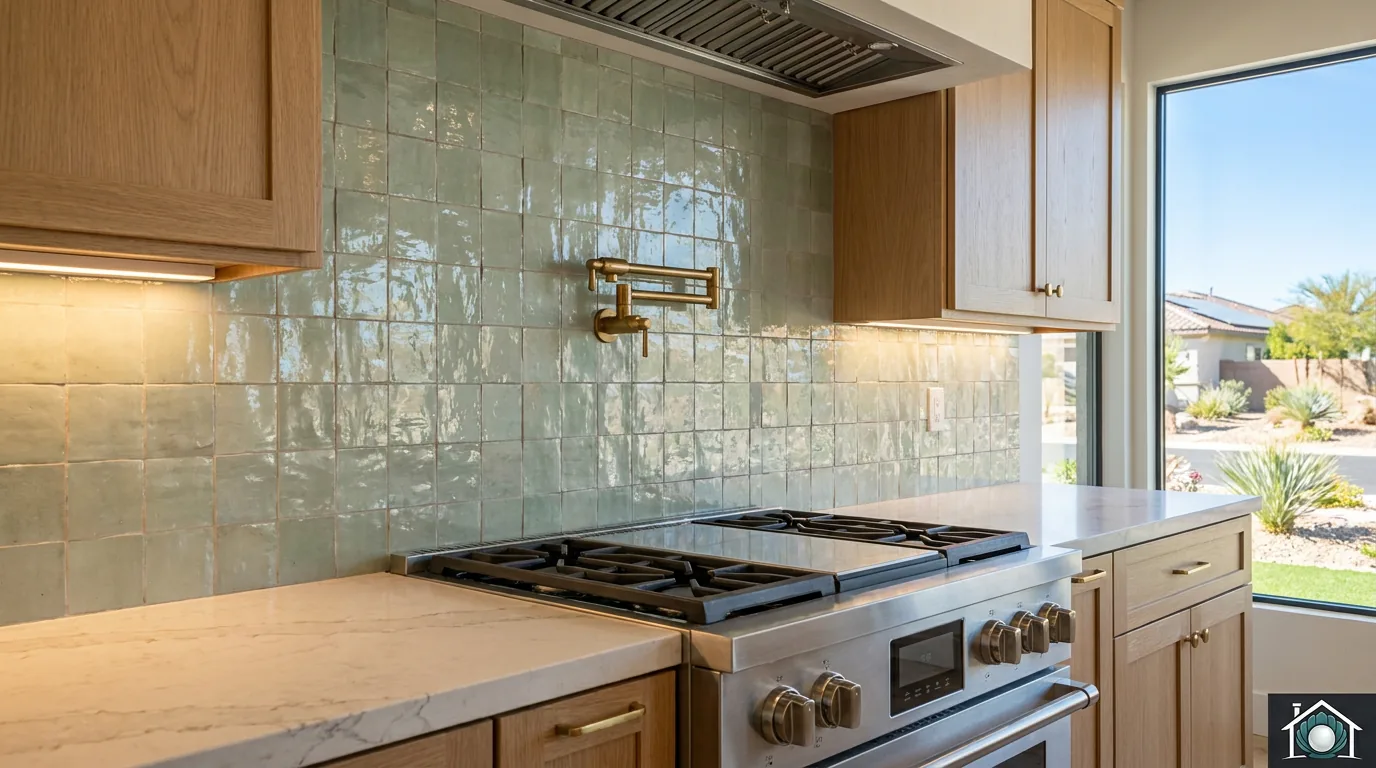
Zellige tile is the breakout material of the past few years and shows no sign of fading. Made by hand in Morocco from clay, fired, and glazed individually, zellige has a slightly irregular shape, a glossy uneven surface, and a depth of color that machine-made tile cannot replicate. Each tile is subtly different from the next, which gives a zellige wall a quality of light that changes through the day. The most popular colors in Paradise kitchens are soft sage, ivory, warm white, and dusty terracotta. Trade-offs: higher material cost (typically [$10 - $30 per square foot] for the tile alone), more skilled installation (the irregular edges have to be set with care), and a slightly textured surface that takes a moment more to wipe clean than a flat tile. For most homeowners who choose it, those trade-offs are worth it.
Large-format porcelain in slab or near-slab sizes (24 by 48 inches and larger, including book-matched slabs that span the full height of the wall) is the cleanest, most contemporary backsplash choice. The eye reads it as continuous stone rather than as tiled surface, which gives the kitchen a calm, refined backdrop. Marble-look, travertine-look, and limestone-look porcelain in soft warm tones dominate. Premium engineered slabs can run [$15 - $50 per square foot] for the slab itself, with significant additional fabrication and installation cost - but the resulting wall is unmatched for a high-end look without the maintenance of real stone.
Handmade ceramic subway tile (3 by 6 inches or 4 by 12 inches) is the warmer, more crafted cousin of standard subway tile. The hand-glazed surface has a slight imperfection that catches light differently than mass-produced tile, and the dimensional irregularity creates subtle shadow lines between tiles. Pricing is more reasonable than zellige (typically [$6 - $18 per square foot] for the tile), and installation is more straightforward. A great choice for transitional kitchens that want hand-crafted character without committing to the full zellige look.
Natural stone slab - real travertine, marble, or limestone - delivers an unmistakable depth and veining that no engineered material fully matches. The downsides are real: stone needs to be sealed regularly, can stain or etch from acidic spills (citrus, vinegar, wine), and is more expensive both in material and skilled fabrication. Natural stone is the right choice for clients who prioritize the look and accept the maintenance, and it remains common in higher-end Paradise kitchen remodels.
Glass mosaic and decorative accent tile has cycled out of the dominant position it held in the early 2010s but still works as a small feature - a single accent strip behind the range, a recessed niche treatment, or a focal panel between upper cabinets. As a full-wall material it tends to read busy and date quickly. As a 6-inch decorative band integrated into a primary tile field, it can add a moment of interest without overwhelming the room.
The Materials at a Glance
| Material | Material cost (per sq ft) | Installation difficulty | Maintenance | Best for |
|---|---|---|---|---|
| Zellige | [$10 - $30] | High - irregular edges | Easy - just wipe down | Warm, hand-crafted kitchens |
| Large-format porcelain | [$8 - $30+] | High - heavy, large pieces | Very easy | Modern, calm, statement walls |
| Handmade ceramic subway | [$6 - $18] | Moderate | Easy | Transitional, broadly appealing |
| Natural stone slab | [$15 - $60+] | High - skilled fabrication | Moderate - regular sealing | High-end, distinctive look |
| Glass mosaic | [$8 - $25] | Moderate | Easy | Small accent areas only |
These are tile-only costs. Full installed pricing including labor, setting materials, grout, edge trim, and any wall prep typically runs roughly 2 to 3 times the tile cost itself.
Layout Decisions: Standard vs Full-Height
The backsplash height is one of the most consequential layout choices and one most homeowners under-think. The traditional 4-inch backsplash (just a strip above the counter) is essentially a finishing detail and rarely reads as designed. The 18-inch backsplash that fills the gap between the counter and the upper cabinets is the most common configuration and works for most kitchens.
The full-height backsplash that runs from the counter all the way to the ceiling has become the dominant choice in current Paradise kitchen remodels, especially in open-concept rooms. It creates a much stronger visual statement, eliminates the awkward strip of paint between the top of the backsplash and the ceiling, and is easier to clean than a shorter backsplash with paint above. The trade-off is cost - more square footage of tile - but in a project where the cabinets and counters are already premium, the full-height upgrade is usually a small percentage increase that delivers a disproportionate impact.
A few configurations that consistently work well: full-height behind the cooktop only, with standard 18-inch height elsewhere (concentrates the design impact and saves cost); full-height across the entire run between the upper cabinets, with the same material continuing behind the cooktop floor-to-ceiling (the cleanest, most contemporary look); and traditional 18-inch backsplash with a tile niche behind the cooktop that breaks the rhythm and adds a focal point.
Color and Pattern in a Paradise Kitchen
The color palette across current Paradise kitchen remodels has consolidated around warm neutrals and earth tones. Soft sage, ivory, warm white, dusty terracotta, mushroom, and warm grey dominate the backsplash choices for kitchens with white-oak or warm-wood cabinets and quartz or porcelain counters. These colors complement the desert palette outside the home and read as restrained rather than trendy.
Cool greys and stark whites have largely cycled out as backsplash choices in this market. A bright white kitchen with a true white backsplash can still work but reads as a holdover from the previous design cycle. Bold accent colors - deep navy, hunter green, terracotta - work as a backsplash if the rest of the kitchen is intentionally neutral, but they require commitment because the backsplash is harder to change than wall paint or hardware.
Pattern is a more subtle decision. A wall of plain field tile (square or rectangular, set in a simple stack or staggered pattern) is calm and timeless. A herringbone or chevron pattern adds movement without color contrast. A geometric or graphic-pattern tile reads bolder and dates faster. The current default in this market is plain or subtly textured tile in a calm pattern - the visual interest comes from the tile material and the lighting, not from a decorative pattern.
Grout, Edges, and the Details That Matter
Grout color is one of the most under-discussed decisions. Color-matched grout (matching the tile color or going one shade darker) is the cleanest, most contemporary look and is the standard in current Paradise remodels. Contrasting grout (white tile with dark grout, light tile with charcoal grout) creates a graphic look that defines each tile but reads dated and busy within a few years. The exception is intentional grid patterns where contrast is the design choice - geometric tile in a defined pattern can take a contrast grout effectively.
Use a high-quality stain-resistant grout regardless of color, and seal the grout after installation if the backsplash is in a heavy-splash area behind the cooktop or sink. Sanded grout for joints over 1/8 inch, unsanded for narrower joints typical of large-format tile.
Edge treatment matters more than people think. The exposed edges of the backsplash - where it meets the upper cabinets, the side walls, and the counter - need a clean termination. Standard options are bullnose tile (a tile with a finished rounded edge), metal edge profile (a thin aluminum or stainless trim that caps the edge), or mitered porcelain edges (the porcelain is cut at 45 degrees and joined to create a wrapped corner with no exposed cut edge). Mitered edges are the most refined option and are now standard on premium large-format installs.
A small list of details worth confirming with the installer before the work starts:
- Tile sourcing and lead time, especially for handmade or imported tile.
- Grout color sample approval before installation, viewed under the actual kitchen lighting.
- Outlet and switch coverplate plans (standard, screwless, or color-matched).
- Niche locations and dimensions, if recessed niches are part of the design.
- Termination details at every exposed edge.
What It Costs in Paradise
A standard backsplash install in a Paradise kitchen (linear feet from counter to upper cabinets, mid-range tile selection, professional installation) typically falls in the [$1,800 - $5,500] range. A full-height backsplash with the same tile selection usually adds 30 to 60 percent to the project cost depending on the height of the upper cabinets.
A premium handmade tile or natural-stone slab project, especially with full-height layout and mitered edges, can run [$5,000 - $15,000+]. Large-format porcelain slab installs at the high end of the range can reach [$10,000 - $25,000+] for kitchens with substantial linear footage and book-matched slabs.
These are general industry ranges. Final pricing depends on tile selection, square footage, layout complexity, edge treatments, and whether plumbing or electrical work is needed behind the wall during the install (this is a good moment to add an outlet under the upper cabinets, install a pot filler behind the cooktop, or add under-cabinet lighting wiring).
When the Backsplash Goes In
In a full kitchen remodel, the backsplash is one of the last items installed - after cabinets, counters, plumbing, electrical, and primary inspections, and before final fixture installs and trim. Tile lead times can be the long pole - handmade or imported tile often runs 4 to 12 weeks from order to delivery, so the tile order needs to go in early enough that delivery does not hold up the schedule.
In a standalone backsplash project (existing kitchen, refreshing only the backsplash), the install itself is typically 2 to 5 days of active work plus tile lead time. The kitchen is fully usable during the install except for the small section being worked.
If you are planning a backsplash refresh or a full kitchen remodel in Paradise, Pearl handles design, material sourcing, and installation for kitchen remodels in Paradise at every tier. Request a free in-home consultation or call (702) 602-8385. We will look at the existing kitchen, talk through tile materials and layouts that fit your space, and put together a realistic plan and quote.